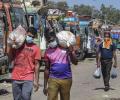
It is likely the government will divide the country into different zones during the proposed extended period of lockdown and might permit a few services to function in safe zones.

There have been several instances of traders dumping fruits and vegetables outside mandis. Or of farmers dumping produce outside their villages or feeding them to their animals.

The agriculture ministry, in the last few weeks, issued guidelines and letters to states to ensure agriculture and food products reach consumers in a timely manner, while farmers don't have to come to the mandis to sell them.
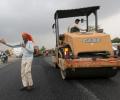
'Some districts have said that areas which are away from the urban centres and where there have been minimal to zero Covid-19 cases may be exempted from the lockdown and construction activity should be allowed,' said a person in the know.
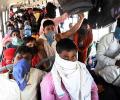
The auto ancillary industry - one of the worst hit due to the labour exodus - will need at least three months to get its factories up and running.

IMD has said the temperature in April-June across most parts in India is expected to be 0.5-1 degrees Celsius warmer than normal. However, doctors and scientists say they haven't found any direct correlation between the speed of COVID-19 spread and warm weather.

Companies have activated a comprehensive pandemic response plan with requisite risk mitigation protocols for keeping networks working as telecom is an essential service.

While the meetings on Friday were preliminary discussions, it is learnt that sectors like tourism; hospitality; aviation; micro, small and medium enterprises (MSMEs); and livestock have sought deferring loan repayments and temporary tax holidays in specific cases to help them tide over the steep fall in economic activity.

The India meteorological department has stated that day temperatures are likely to be above normal by 0.5 degree Celsius, reports Sanjeeb Mukherjee.

India is expected to harvest 291.95 mt of foodgrain in 2019-20

With development of the Vadhavan port, India will break into the countries with top 10 container ports in the world.
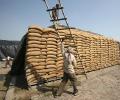
This is the highest in the past five years and almost 24 per cent more than last year.

Finance Minister Nirmala Sitharaman has brought down the budgetary allocation for the fertiliser subsidy for FY21 to Rs 71,309 crore, from the RE of Rs 79,998 crore for FY20, while increasing food subsidy to FCI through "ways and means advance" to Rs 50,000 crore for FY21, from Rs 36,000 crore in RE for FY20, and under the National Food Security Act (NFSA) to Rs 77,982 crore, from Rs 75,000 crore.
Various stakeholders, including about 600 developers, bankers and officials from various wings, including the National Highways Authority of India, will also be present.

Reiterating its position, TRAI, which oversees both the telecom and television sectors in the country, said the amendments suggested on January 1 had been done to correct "distortions" in the market and address pricing issues.

While rising food inflation is a matter of grave concern for a significant chunk of the population and for policy makers as well, it marks a turnaround in the fortunes of the farmer, reports Sanjeeb Mukherjee.
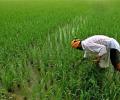
A pick-up in farmer income could have a cascading impact on the rural economy, though agriculture is becoming a smaller part of India's overall rural incomes.

The company, which has a subscriber base of 120 million, also plans to raise funds via a bonds issue. The company's impending 4G launch is also expected in the second half of the current financial year for which it would invest Rs 12,000 crore, partly through bonds.

Starting today, Modi and top officials in the Prime Minister's Office will be briefed by various central ministries and departments on their plans as well as agenda for the next five years. They will also apprise the PMO of the work they have done so far in realising the agenda of government's second term in office.

Huawei came under a cloud after allegations that the firm's electronic and telecom devices helped China spy on US corporations and agencies.
 © 2026 Rediff.com - Advertise with us - Disclaimer - Privacy Policy - Sitemap - Feedback - About us - Terms of use - Grievances